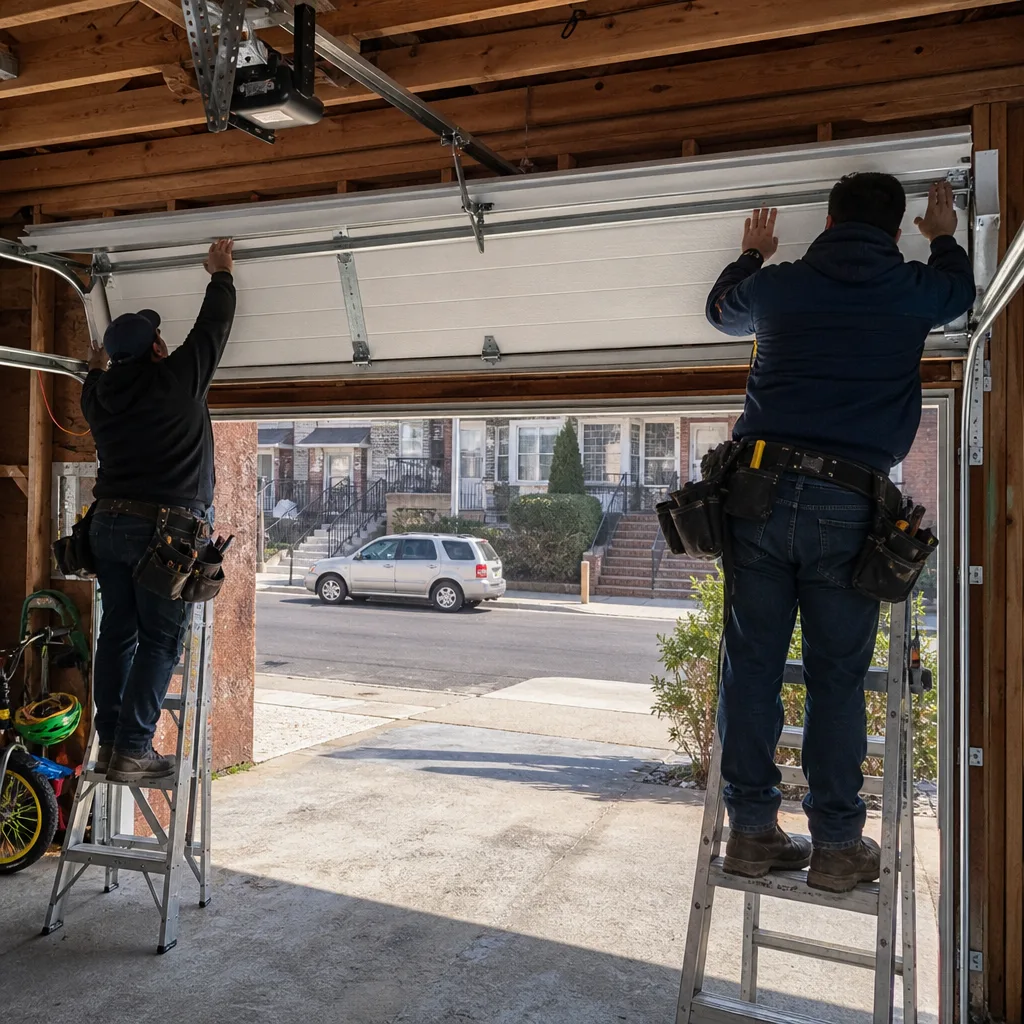
Last updated November 21, 2026
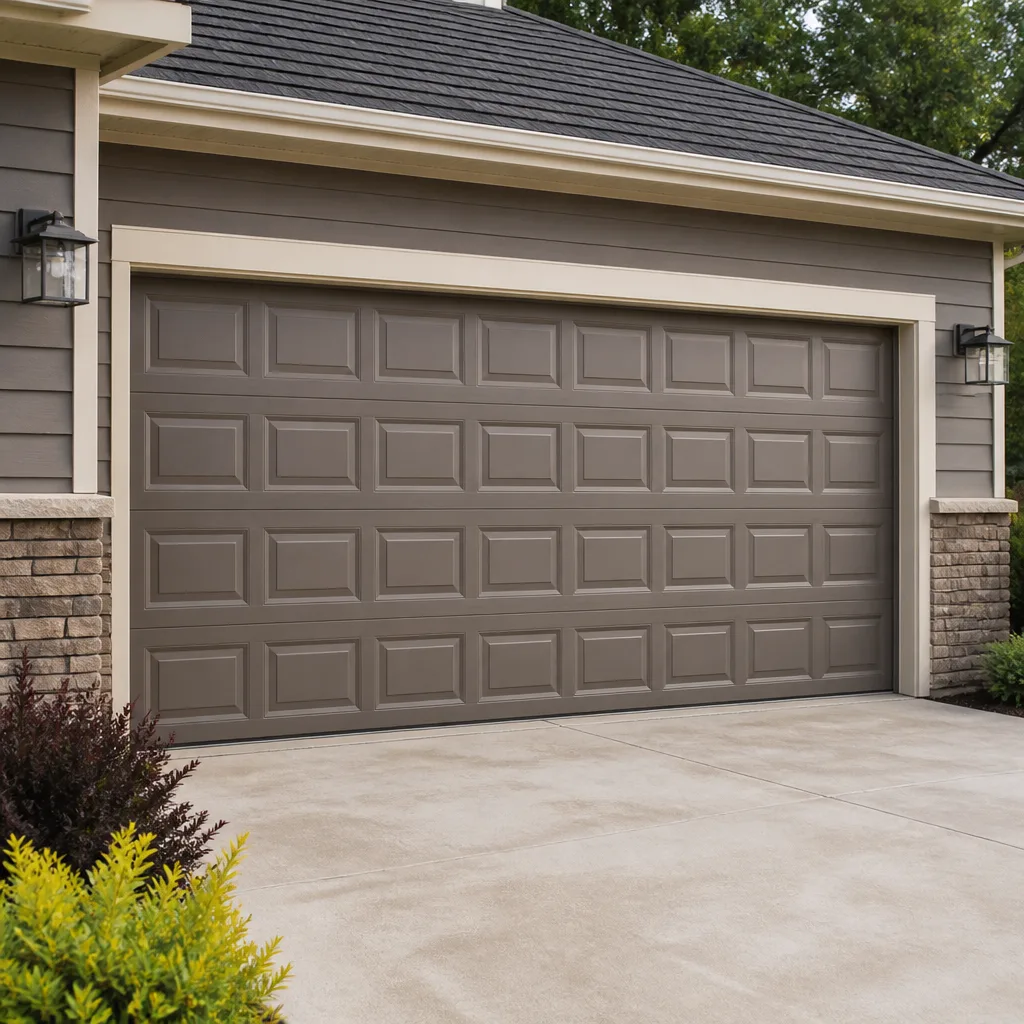 Raised-panel steel
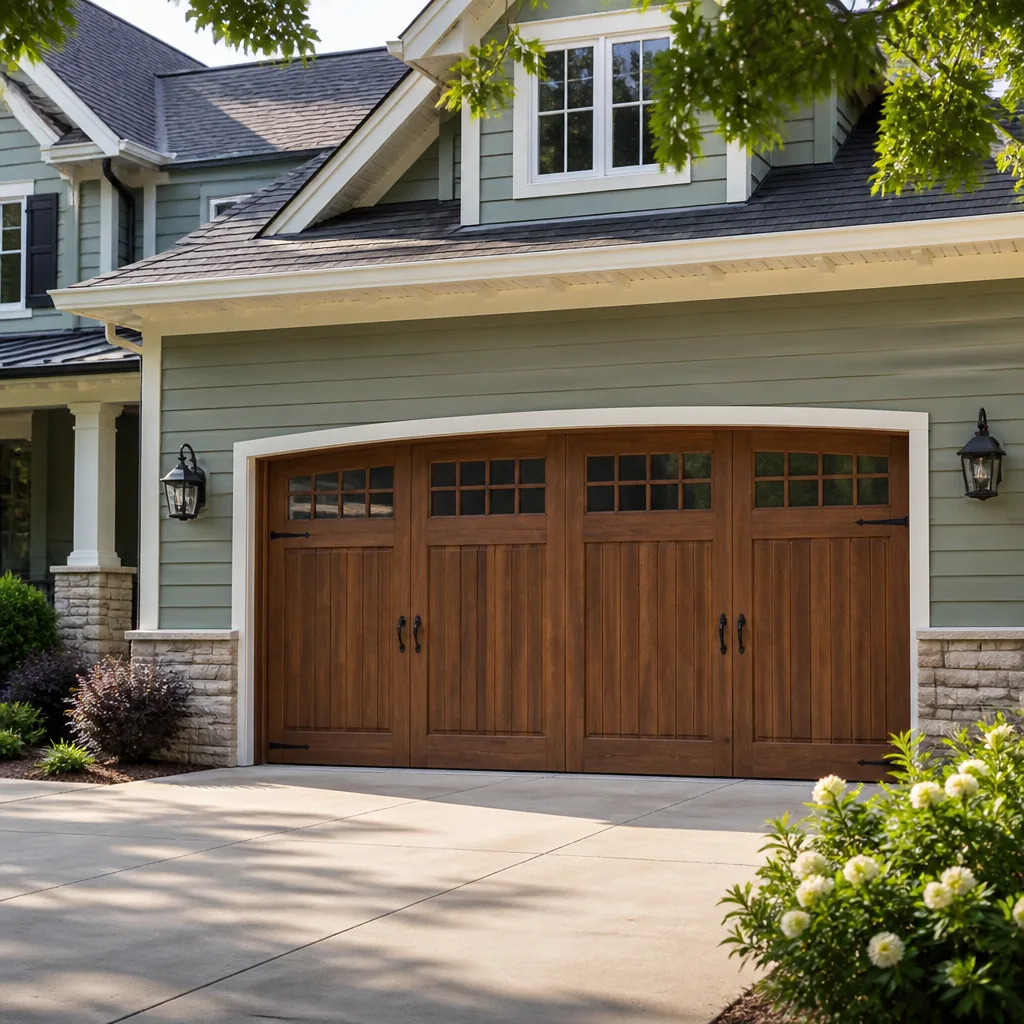 Carriage house
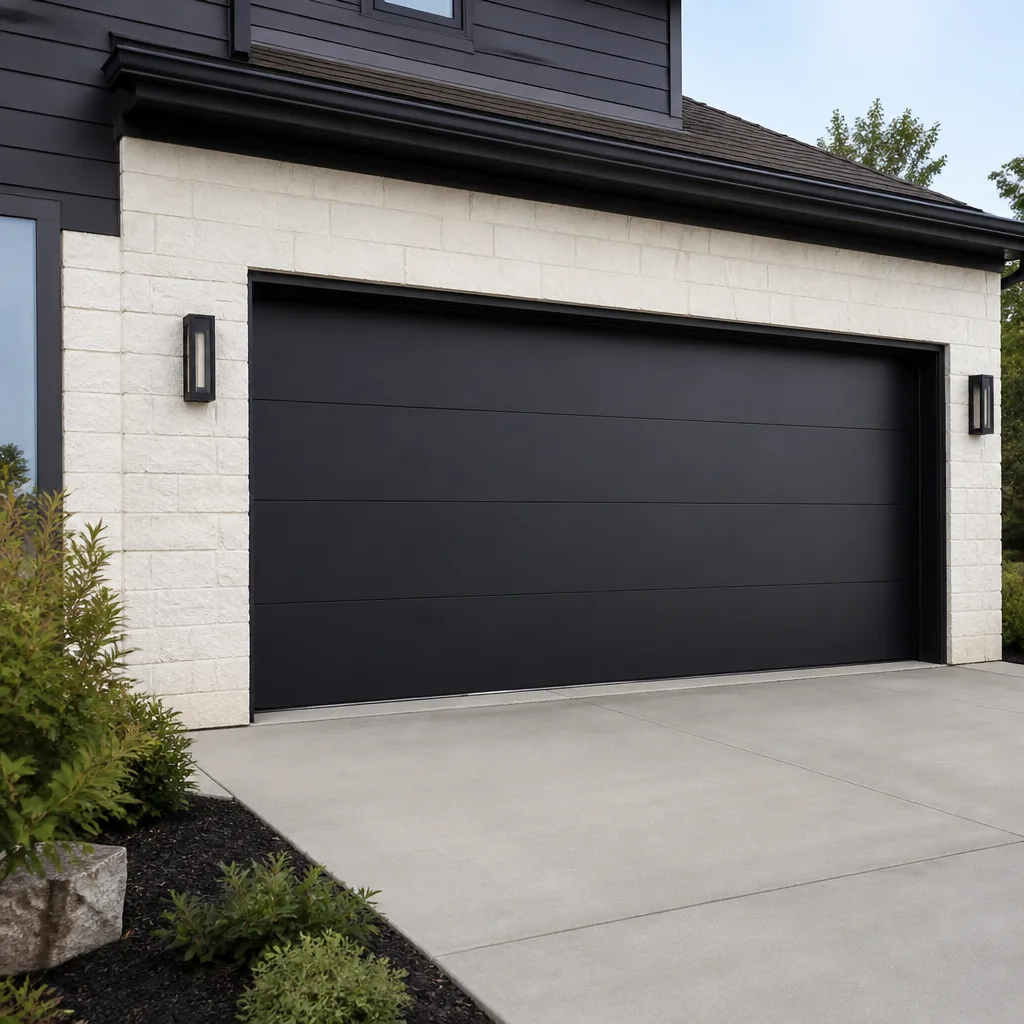 Modern flush
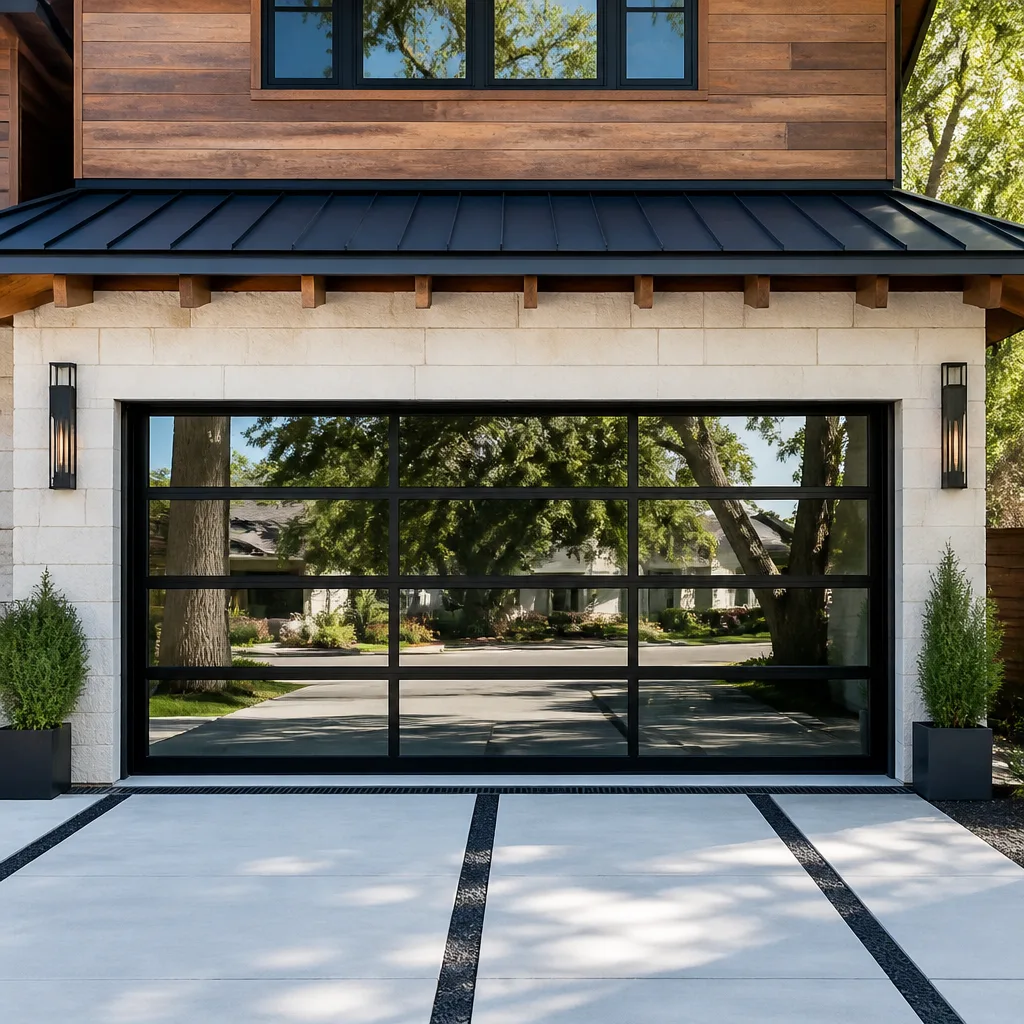 Full-view glass
 LiftMaster openers
 Chamberlain openers
Full 25-point door and opener safety check with every visit - springs, cables, rollers, tracks, and your LiftMaster or Chamberlain opener included
You get a price before we start. It does not change when the pro arrives.
Get your free estimateDIY vs Professional Garage Door: The Crown Heights Homeowner’s Decision Guide
A torsion spring holds roughly 100 lbs of stored tension. When a DIY repair goes wrong, the result usually isn’t a crooked door you can laugh about later. It’s a hospital visit. Most online “DIY garage door” content skips that part because it’s inconvenient and it doesn’t sell pageviews. We’d rather draw the line honestly. This guide separates the tasks you can handle on a Saturday afternoon from the ones that can injure you or cost more than the original repair, and it explains how that line works for homeowners in Crown Heights, where brick rowhouses, tight lots, and older door systems change the calculus.
Quick Answer
You can safely handle garage door maintenance yourself: lubrication, weatherstrip replacement, and minor sensor alignment. You should not touch springs, cables, or the torsion assembly, because those carry extreme stored energy and a single slip can cause serious injury. For opener motor problems and any structural repair, a professional is usually cheaper once you count follow-up calls and warranty risk. In Crown Heights, the smart approach is DIY upkeep plus professional work on anything mechanical.
Styles & brands we work with
- Raised-panel steel
- Carriage house
- Modern flush
- Full-view glass
- LiftMaster openers
- Chamberlain openers
Table of Contents
- Why the DIY Question Is Really About Failure Modes
- The Short, Honest List of Safe DIY Tasks
- The Repairs That Look Easy but Aren’t
- How NYC Warranty and Liability Rules Change the Math
- DIY vs Professional Cost in Crown Heights: Where the Savings Actually Are
- The Middle Path: Using DIY Maintenance to Extend Pro Repairs
- Why Brand Familiarity Matters on Older Crown Heights Doors
- A Step-by-Step Decision Framework
Why the DIY Question Is Really About Failure Modes
The usual DIY debate frames everything around skill: are you handy enough, do you have the tools, can you follow a video. That framing misses the point. The real question is what happens when a task fails. Some garage door tasks fail quietly. You replace a weatherstrip badly and it leaks a little. Others fail violently. A torsion spring under load can release in a fraction of a second, and the force travels through whatever is in its path.
So instead of asking “can I do this,” ask “what’s the worst realistic outcome if I get it wrong?” That single shift sorts nearly every garage door job into three buckets:
- Low-risk tasks with small, recoverable failure modes: cleaning, lubricating, swapping a bottom seal, nudging a photo-eye back into line.
- Medium-risk tasks that can damage the door or opener but rarely hurt you: adjusting travel limits, resetting a remote, replacing a wall button.
- High-risk tasks with failure modes that can injure you or wreck the whole system: springs, cables, torsion hardware, and opener motor replacement.
In Crown Heights, that distinction matters because so many homes have older doors that have already been adjusted, patched, and re-tensioned more than once. A door that’s been through multiple cycles of wear and improvised fixes has less margin for a wrong move. We’ve worked on plenty of them, and the pattern is consistent: the door that fails most dramatically is usually the one someone tried to save money on first.
The Short, Honest List of Safe DIY Tasks
Here’s the good news. A meaningful chunk of garage door upkeep is genuinely doable for a careful homeowner, and doing it regularly is the single best way to delay the expensive repairs. These are the jobs we’re comfortable telling you to take on yourself.
1. Lubrication
Once or twice a year, lubricate the hinges, rollers, and the torsion spring with a proper garage door lubricant, not WD-40. A dry, squeaky door is a door wearing itself out faster than it needs to. This is the highest-value five minutes in garage door ownership.
2. Weatherstrip and bottom seal replacement
A cracked bottom seal lets in cold air, water, and the occasional ambitious mouse. Replacing the rubber seal along the bottom of the door is a straightforward job with basic hand tools. Same for the thin weatherstripping around the frame.
3. Photo-eye alignment
If your door won’t close and reverses immediately, the safety sensors near the floor are the usual culprit. Wiping the lenses and nudging them until the indicator lights settle is safe and quick. You’re not opening the mechanism or touching anything under tension.
4. Track cleaning
Wipe down the vertical tracks with a damp cloth and check that nothing is bent or obstructing the path. Don’t try to bend a track back into shape yourself; that’s a professional adjustment. Cleaning, though, is all yours.
These four tasks cover the majority of what goes wrong with a garage door in Crown Heights between major services, especially during the humid summer stretch and the freeze-thaw cycles of winter that work on every seal and hinge in the neighborhood.
The Repairs That Look Easy but Aren’t
This is the section the video tutorials leave out. Several garage door repairs look simple on camera and are genuinely dangerous in practice. The camera doesn’t show you the stored energy.
Spring replacement
A torsion spring or a pair of extension springs holds the entire weight of the door in tension. When one fails, it fails with force. Replacing a spring requires winding and securing that tension with the correct bars and the correct technique, and a single slip can break a hand or worse. Spring repair is dangerous, and it’s also what we do every day. That’s exactly why we don’t recommend you do it once. If you take one thing from this guide, take this: garage door repair that involves springs is not a homeowner job.
Cable work
The cables run alongside the springs and carry similar loads. A cable that snaps under tension can whip across the garage. Replacing or re-routing one is not a job for anyone without the right tools and training.
Opener motor and electronics
Openers can look like a simple swap, but the motor, the logic board, and the safety reversing system all have to work together, and on older units in Crown Heights homes the wiring is often not what the manual assumed. This is where trusted garage door opener repair saves you from a door that closes on a car or a child. If your opener is a LiftMaster or Chamberlain unit that’s gone silent, a professional diagnoses the actual failure rather than guessing at a replacement.
One more: never try to straighten a bent track or re-hang a door panel yourself. Those jobs combine weight, alignment, and the risk of a door coming off its tracks.
How NYC Warranty and Liability Rules Change the Math
New York City’s home improvement landscape is stricter than most homeowners realize, and it tilts the DIY-vs-pro calculation in a specific direction. The city requires contractors doing home improvement work to be licensed, and unpermitted or unlicensed work can create real trouble when you sell, refinance, or file an insurance claim.
Here’s what that means in practice for a garage door project in Crown Heights:
- Warranty coverage can be voided when a manufacturer determines that improper installation or repair caused the failure. If you replace a component yourself and it fails, the brand may decline to honor the warranty.
- Homeowner’s insurance may push back on a claim tied to work that wasn’t done to code or by a licensed professional. Ask your insurer how they treat garage door work before you decide.
- New door installation may require a permit depending on the scope and the structure. Most cities require a permit for structural changes, so check with NYC’s buildings department before any major install.
We connect Crown Heights homeowners with independent local professionals who are licensed and insured as the state requires, and we can work with your insurer if a claim is involved. That licensing layer is the part DIY can’t replicate, and it’s often worth more than the money you save on labor. When you’re weighing a full garage door installation, it’s not a close call: use a licensed pro.
DIY vs Professional Cost in Crown Heights: Where the Savings Actually Are
Cost comparisons usually compare the price of a part to the price of a repair. That’s the wrong comparison. The right one includes what happens when the DIY attempt fails and you have to call someone anyway.
Here’s how the line items typically stack up in the Crown Heights market. These are estimates, and a written quote from a professional is what actually sets your price.
| Task | DIY reality | Professional estimate |
|---|---|---|
| Lubrication and tune-up | Cost of lubricant only | Typical service visit range, often bundled |
| Bottom seal replacement | Cost of seal and an afternoon | Low-cost repair, usually quick |
| Photo-eye alignment | Free | Usually folded into a service call |
| Spring replacement (one spring) | Not recommended; injury risk | Typical range for a single spring; a matched pair costs about twice that |
| Cable replacement | Not recommended | Moderate repair cost, priced per door |
| Opener motor or board | High risk of misdiagnosis and repeat failure | Repair or replacement priced by unit and brand |
| New door installation | Not feasible for most homeowners | Priced by door size, material, and opener; free measure and written quote |
The pattern: DIY saves real money on the maintenance tier and costs you more on the repair tier. The homeowner who lubricates twice a year and calls a professional for anything mechanical spends less over time than the one who tries to save on a spring and ends up paying for the spring, the damage, and the emergency visit. Prices are quoted and agreed before any work starts, so there’s no invoice surprise at the end.
The Middle Path: Using DIY Maintenance to Extend Pro Repairs
The smartest homeowners in Crown Heights don’t pick a side. They run a simple maintenance routine that keeps the door healthy between professional visits, which stretches the life of every repair. Here’s the routine:
- Monthly: Open and close the door and listen. Grinding, popping, or a door that hesitates are early warnings. Write down what you hear.
- Every few months: Lubricate the hinges, rollers, and springs. Wipe the tracks clean.
- Twice a year: Check the bottom seal and weatherstripping for cracks. Test the safety reverse by placing a small object in the door’s path; the door should reverse. Test the photo-eyes by waving a hand across them while the door closes.
- Before winter: A professional tune-up. Cold weather is hard on springs and hinges, and a pre-winter check catches a weakening spring before it fails.
- After any unusual sound or event: Don’t wait. A door that gets stuck or reverses unexpectedly is a signal, not a quirk.
That routine is the difference between a door that lasts and one that limps from repair to repair. It’s also the best argument for professional work: you get the safe repairs done by people who do them routinely, and you do the easy upkeep yourself.
Why Brand Familiarity Matters on Older Crown Heights Doors
Many Crown Heights homes still have the door and opener that were installed years ago, and the brands vary widely. A Craftsman opener from a previous decade behaves differently from a modern LiftMaster unit, and a Raynor door has different hardware than a Chamberlain system. If a repair tech doesn’t know the brand, they’re guessing.
We’re factory-familiar with eight leading brands, including LiftMaster, Chamberlain, Genie, Clopay, Amarr, Wayne Dalton, Craftsman, and Raynor. That matters in a few concrete ways:
- Correct parts the first time: We know which spring, cable, or logic board fits which system, so you’re not waiting on a second visit.
- One call covers the door and the opener: A single visit can address both the mechanical door and the electronic opener, which is where a lot of DIY attempts go wrong.
- No brand-switching: We work on whatever is already on your home, so you don’t have to replace a perfectly good door just to get service.
For installation, that same familiarity runs across Clopay, Amarr, Wayne Dalton, and Raynor, from builder-grade to architectural steel. Our technicians have up to 15 years of experience, and that’s the kind of thing that shows up when a door needs to be hung level in a tight Crown Heights lot.
A Step-by-Step Decision Framework
When something goes wrong with your garage door, run this sequence before you decide to DIY. It takes two minutes and it prevents most of the expensive mistakes.
- Identify the symptom. Is the door not moving, moving unevenly, making noise, or failing to close? Write it down.
- Check the safe tier. Is it a sensor issue, a seal, a lubrication problem, or a track cleaning? If yes, handle it yourself.
- Stop at the danger line. If the symptom involves springs, cables, torsion hardware, or the opener motor, stop. Don’t open the mechanism, don’t loosen the cables.
- Check the brand and model. Note the brand on the door and the opener. That information speeds up any professional diagnosis.
- Call for a free estimate. Get a written price before work starts. On repair calls, the same-day and emergency options are usually what matter most.
- Book maintenance after the repair. Ask what upkeep the repair will need so you can extend its life.
This framework is the whole guide in miniature: do the safe work, stop at the line, and call for everything above it.
Common Mistakes to Avoid
- Trying to save on a spring. The most dangerous repair is the one people are most tempted to DIY. The stored energy doesn’t care how careful you are, and a spring failure can be a serious injury.
- Ignoring a door that reverses on its own. In Crown Heights, a door that won’t close is a security problem, not a nuisance. It’s a same-day call, not a next-week call.
- Replacing parts without diagnosing. A door that won’t move can be a spring, a cable, or an opener. Throwing a new board at it often misses the real cause and costs more than a diagnosis.
- Using the wrong lubricant. WD-40 strips away the proper lubricant and attracts grit. Use a dedicated garage door lubricant on hinges and rollers.
- Hiring an unlicensed handyman for a structural job. NYC has real rules about home improvement work, and an unlicensed fix can void a warranty or complicate an insurance claim.
- Skipping the pre-winter tune-up. Cold weather is hard on springs. A check in fall is much cheaper than an emergency in January.
- Forgetting to turn off the opener before any inspection. Even safe DIY maintenance should start with the opener disconnected so the door can’t move unexpectedly.
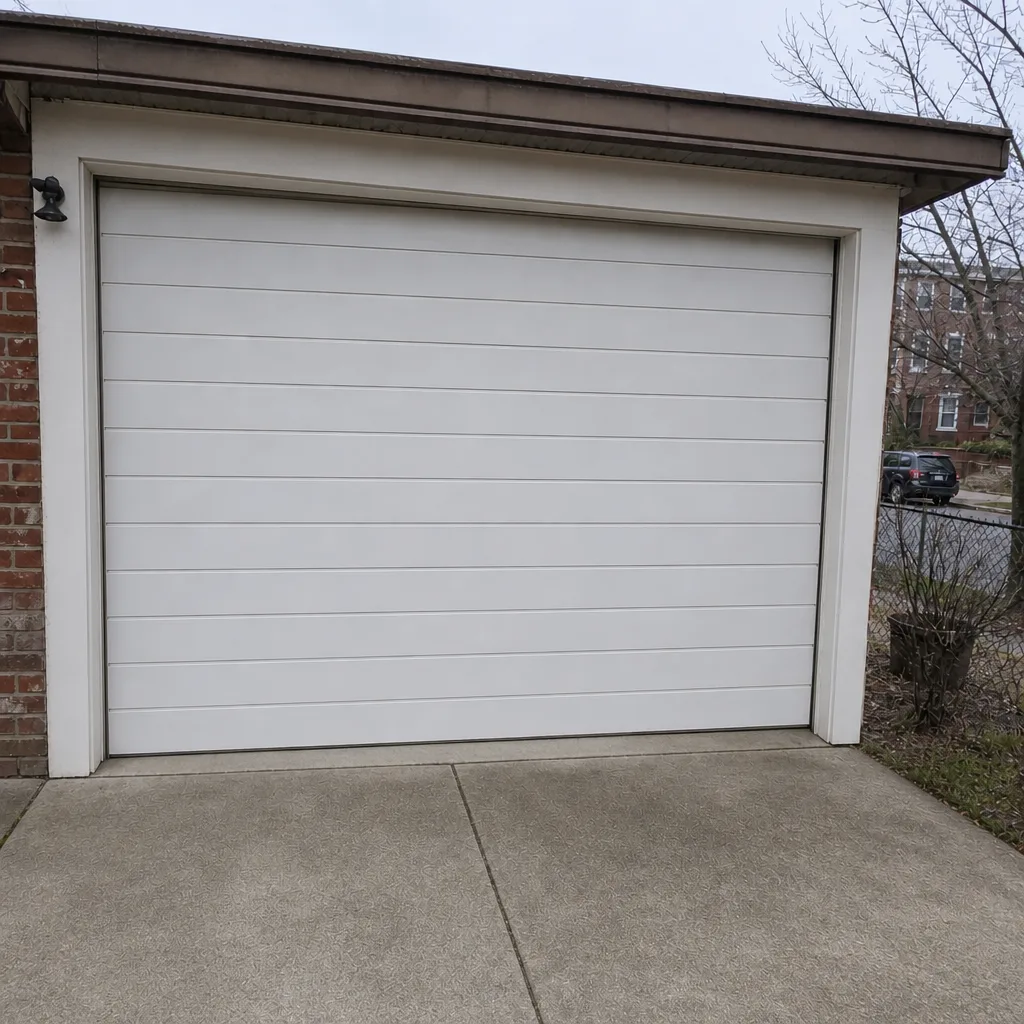
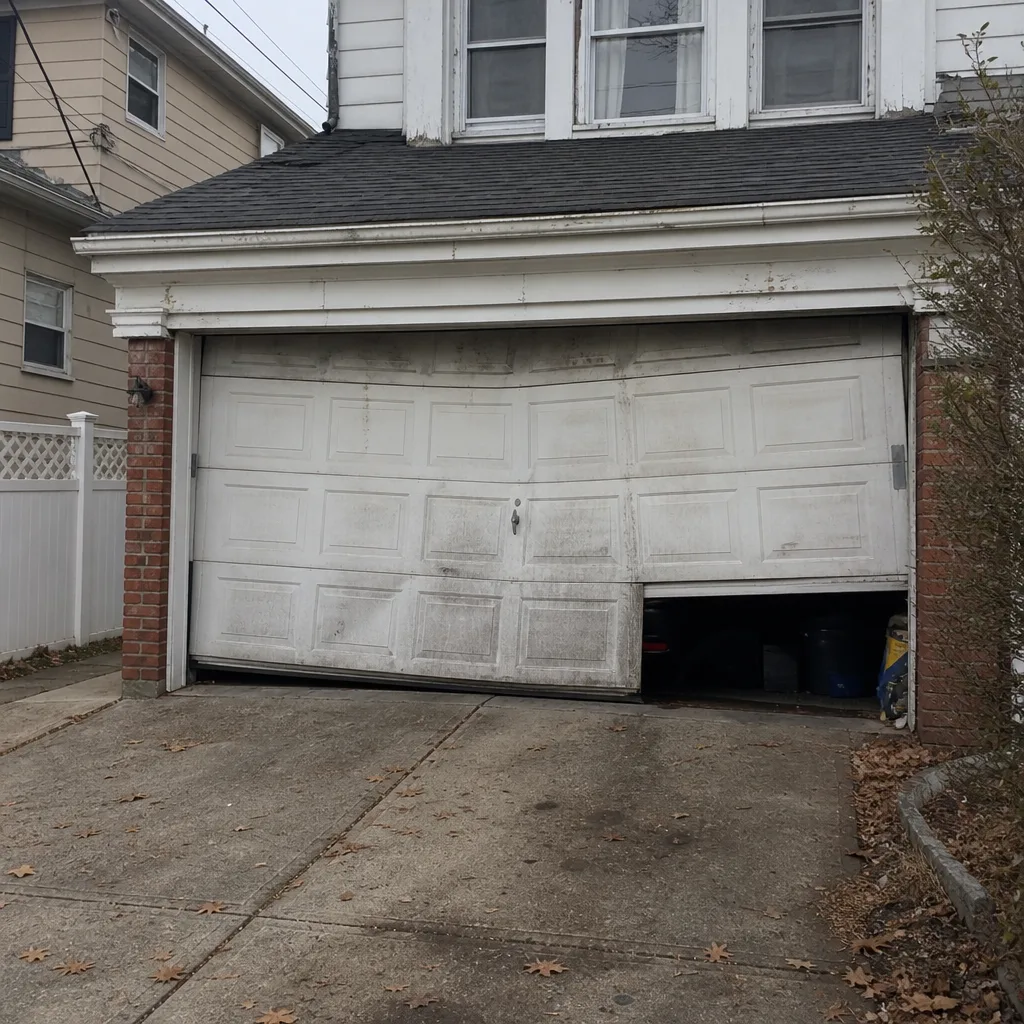
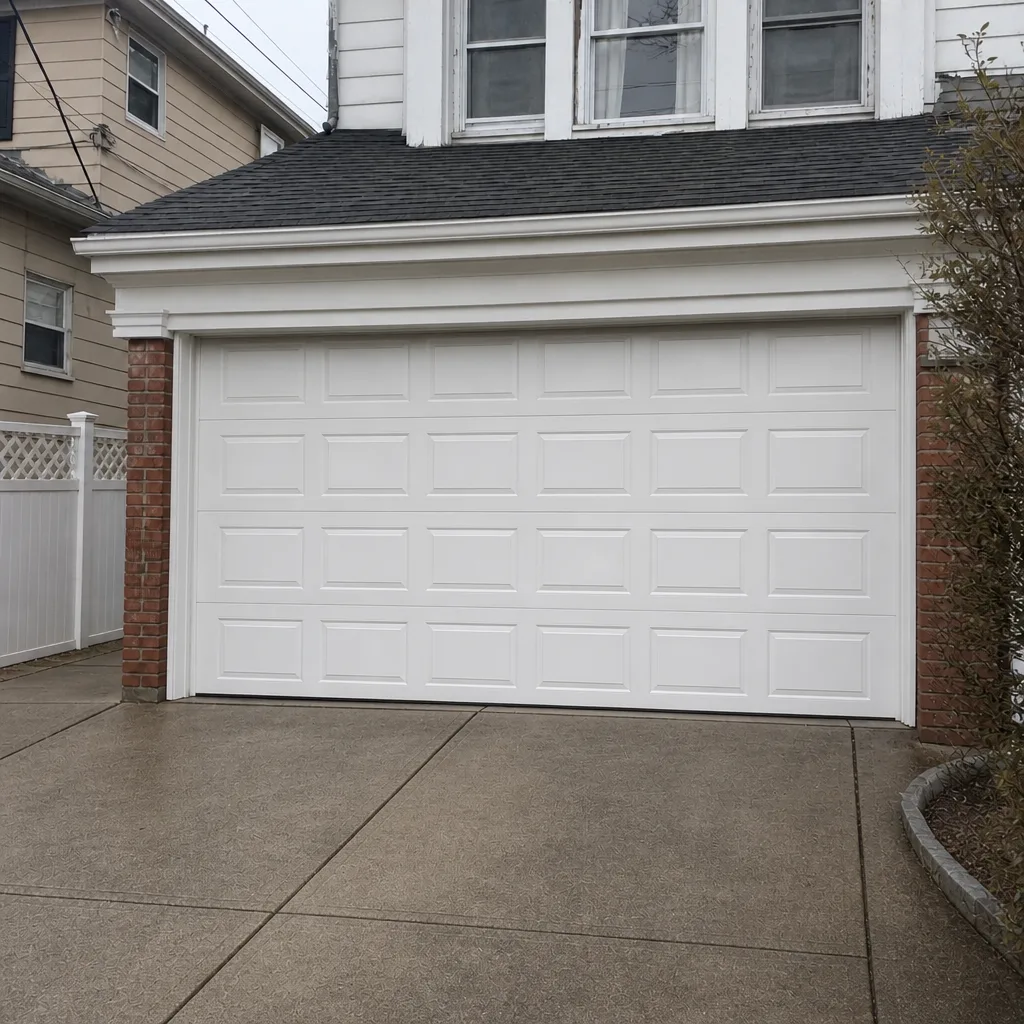
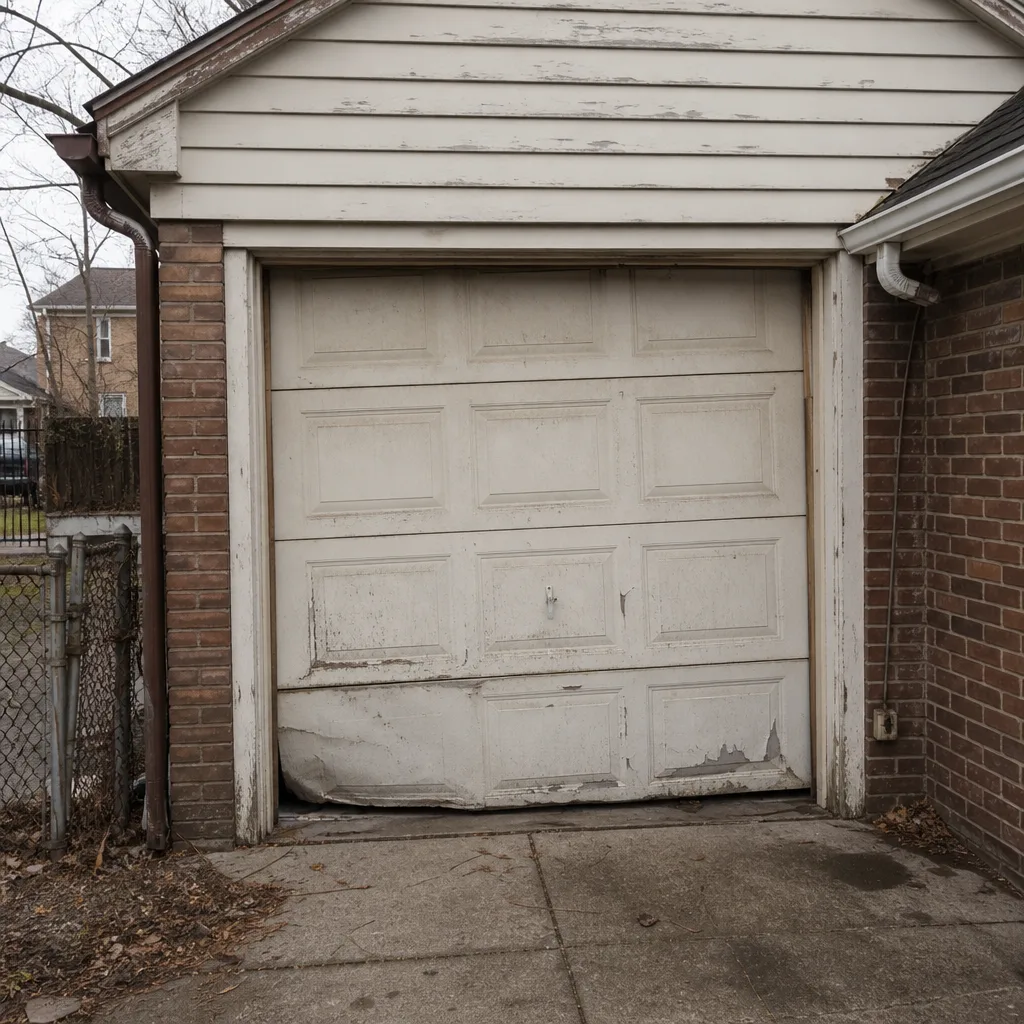
See the difference
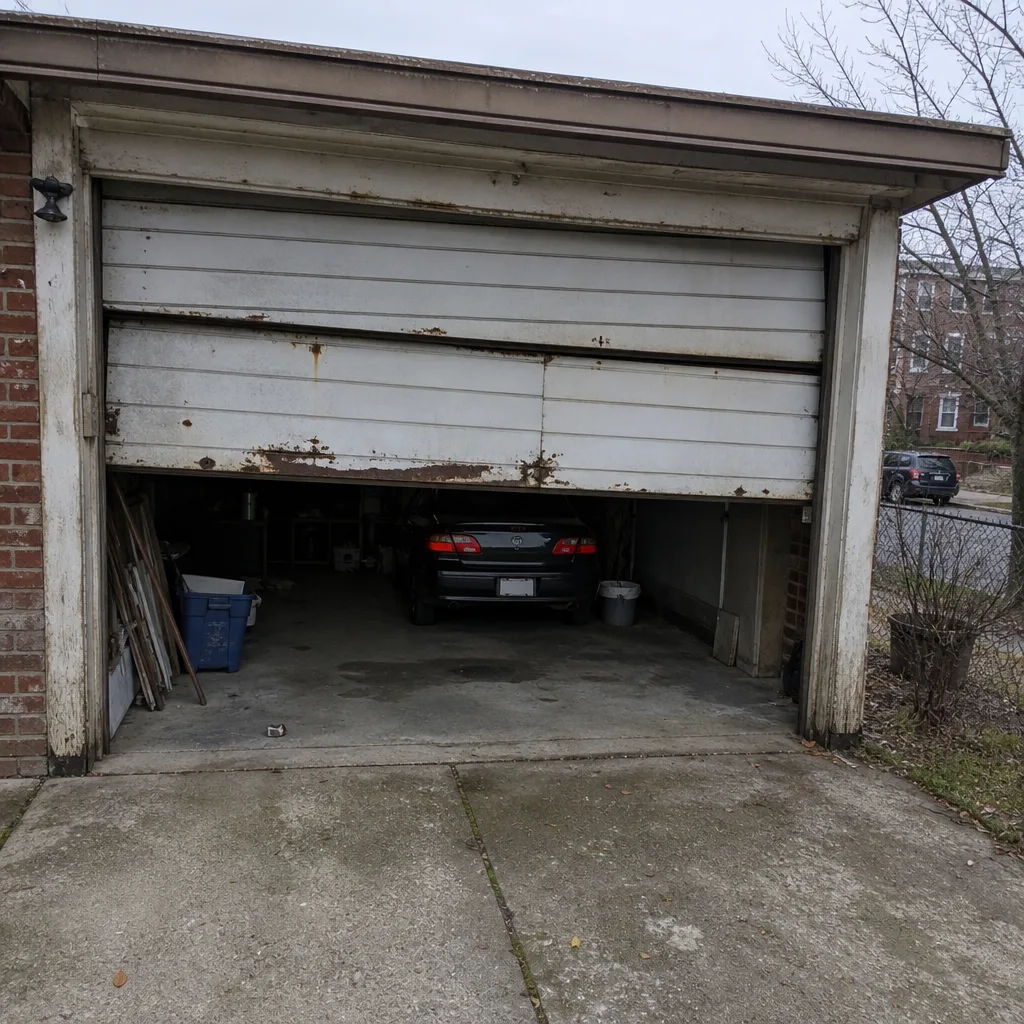 Before
 After
 Before
 After
 Before
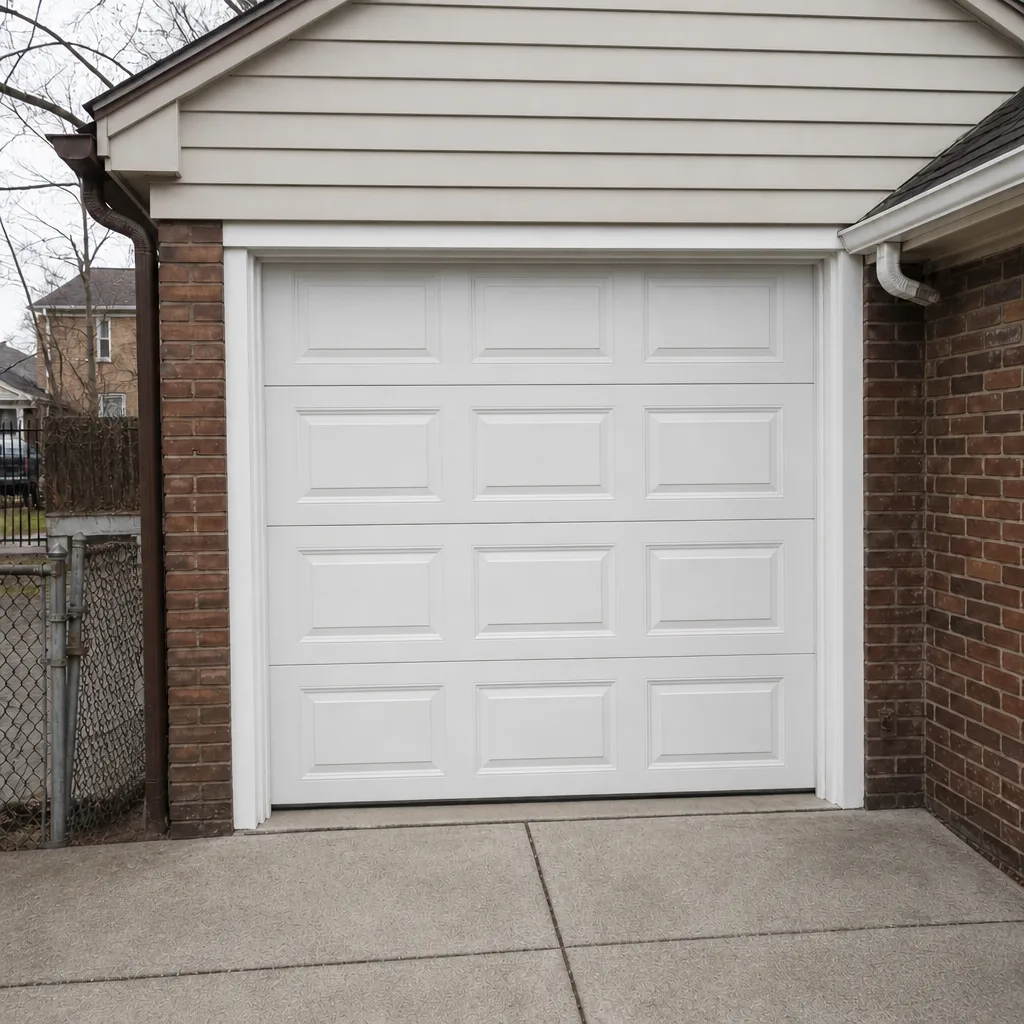 After
When to Call a Professional
Call a professional when the repair involves stored tension or the whole system. Springs, cables, torsion hardware, opener motors, and any door that’s off its tracks all belong in that category. Call if the door won’t close (a security and safety issue), if it reverses without an obvious cause, if you hear a loud pop, or if the door is visibly uneven. Also call if you’re planning a new door or a major replacement, where a free measure and a written quote come before anything else. Garage Door Repair Crown Heights offers free estimates in Crown Heights. Call (833) 721-7259. Garage Door Repair Crown Heights covers spring repair, opener repair, emergency service, and installation, and we work on your brand rather than asking you to switch.
Frequently Asked Questions
No, and it’s the one repair we won’t tell a homeowner to attempt. A torsion spring holds roughly 100 lbs of stored tension, and a slip can cause serious injury. A torn or snapped spring is a professional repair and often a same-day one. Call (833) 721-7259 for a free estimate, and we’ll handle the tension safely.
Lubrication, weatherstrip and bottom seal replacement, photo-eye alignment, track cleaning, and testing the safety reverse are all reasonable DIY tasks. These have small, recoverable failure modes. Anything involving springs, cables, or the opener motor is where DIY stops. Doing the safe tier yourself is smart; it extends the life of professional repairs.
DIY is cheaper for maintenance and more expensive for repairs. A seal or a lubrication routine saves real money. But a DIY spring or opener job often leads to a follow-up call, and the total is higher than doing it right the first time. The written quote from a professional is what sets the final price, and it’s agreed before any work starts.
It can, and it’s worth asking your insurer directly. Manufacturers may decline warranty coverage if improper installation or repair caused the failure, and NYC has strict rules about home improvement licensing. We connect Crown Heights homeowners with independent local professionals who are licensed and insured as the state requires.
Treat it as one. A garage that won’t close is a security issue and a safety issue, and in Crown Heights that’s a same-day problem rather than a schedule-it-later one. Emergency garage door service is available for exactly this. Call (833) 721-7259 and we’ll get it moving.
Likely yes. We’re factory-familiar with eight leading brands, including LiftMaster, Chamberlain, Genie, Clopay, Amarr, Wayne Dalton, Craftsman, and Raynor. That means one call can cover the door and the opener together, and you don’t have to switch brands to get service. Our technicians have up to 15 years of experience on these systems.
The Bottom Line
The DIY-vs-pro question for garage doors comes down to failure modes, not skill. Maintenance is yours: lubrication, seals, sensors, and cleaning keep the door healthy and stretch the life of every repair. Springs, cables, opener motors, and anything structural are not, because the worst outcome isn’t a crooked door, it’s an injury or a warranty problem. In Crown Heights, where older doors and strict licensing rules raise the stakes, the smart path is DIY upkeep plus professional work on the mechanical side. Do the easy tier, stop at the line, and let a specialist handle the rest.
If you’re facing a repair that’s past the DIY line, or you just want a straight answer on what your door needs, call Garage Door Repair Crown Heights at (833) 721-7259 for a free estimate. We’ll diagnose the actual problem, quote it before any work starts, and fix it with no surprises. Same-day and emergency service is available when a broken spring or a stuck door can’t wait.
Written by the team at Garage Door Repair Crown Heights.